
TBN initial public offering (IPO) of 25 million shares and advances towards registering on the Market for Alternative Investment (mai).

“TBN Corporation PLC. or TBN, has submitted a filing to the Securities and Exchange Commission (SEC) to prepare for the initial public offering (IPO) of 25 million shares to raise capital for the expansion of its business, enhance competitiveness, and support digital transformation trends. The financial consultant for this venture is Pioneer Advisory Co., Ltd. Mr. Panayu Sirikrachangsri, CEO of TBN Corporation Ltd., revealed that the company has filed the necessary documents and draft prospectus with the SEC to offer ordinary shares to the public for the first time. The IPO will consist of 25 million shares, representing 25% of the total shares, with a par value of 0.50 baht per share. It is expected to be listed on the Market for Alternative Investment (MAI), with financial advisory provided by Pioneer Advisory Co., Ltd. The raised funds will be used to support the growth of TBN, improve reliability, and enhance competitiveness. The company’s objectives for the capital raised include utilizing it as working capital to expand the business and support the increasing trend of digital transformation. The funds will also be allocated for hiring more personnel, developing systems, and improving facilities to accommodate the growing number of projects and employees. TBN Corporation Ltd. is a publicly traded company that provides end-to-end digital design and development services. The company specializes in digital transformation consultancy and develops solutions according to customer requirements, utilizing the Low-Code Development Platform (Low Code) software, MENDIX, which enables faster application development compared to traditional methods (High Code). Currently, TBN Corporation Ltd. is the exclusive distributor of Siemens’ MENDIX software copyrights in Thailand, being the first in the country. With over 15 years of experience and a team of experts in software development services, the company is well-positioned to provide high-quality software solutions.” The services provided by the…
TBN Corporation exchanged experiences on how digital business at “National Coding Day 2023”
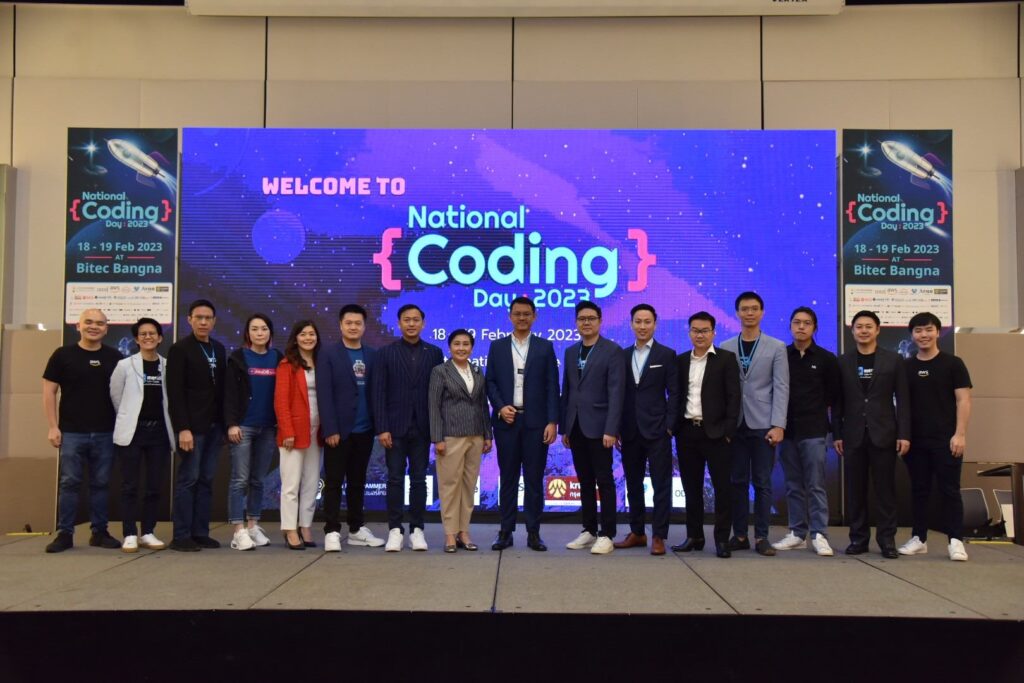
TBN Corporation takes the stage at “National Coding Day 2023” to exchange experiences on how digital business is driven by coding. Mr. Panayu Sirikrachangsri, CEO, the leader of the Low-Code industry from TBN Corporation PLC. (TBN), took the stage to exchange and share expertise in providing the first and most experienced Low-Code platform service provider in Thailand for over 15 years. TBN is the sole representative of Mendix Low-code development platform in Thailand. He participated in the “National Coding Day 2023” event organized by the Thai Programmer Association at the BITEC Exhibition and Convention Center. Mr. Panayu, as a Low-Code Expert, shared insights on the topic of “Will Low Code Replace Programmers?” This trend is currently gaining momentum in the field of digital transformation and has attracted the interest of students and the general public who are interested in embracing digital trends. The National Coding Day 2023 event is the largest gathering of programmers and digital enthusiasts in Thailand, covering various areas such as Low Code, No Code, AI Marketing, Agile, DevOps, Frontend, Data Science, Flutter, Security, Tester, UX, Serverless, Software Delivery, RPA, Golang, VueJS. It aims to provide valuable opportunities for everyone in the country, including the future prospects of Thai children in learning coding and the opportunities to create new businesses using various technologies, particularly the collaboration between artificial intelligence and human capabilities. National Coding Day 2023 National Coding Day 2023 CEO TBN-Panayu Sirikrajangsri National Coding Day 2023 TBN Management team National Coding Day 2023
TBN Corporation wins TOP Mendix partner award in Asia Pacific 2022.
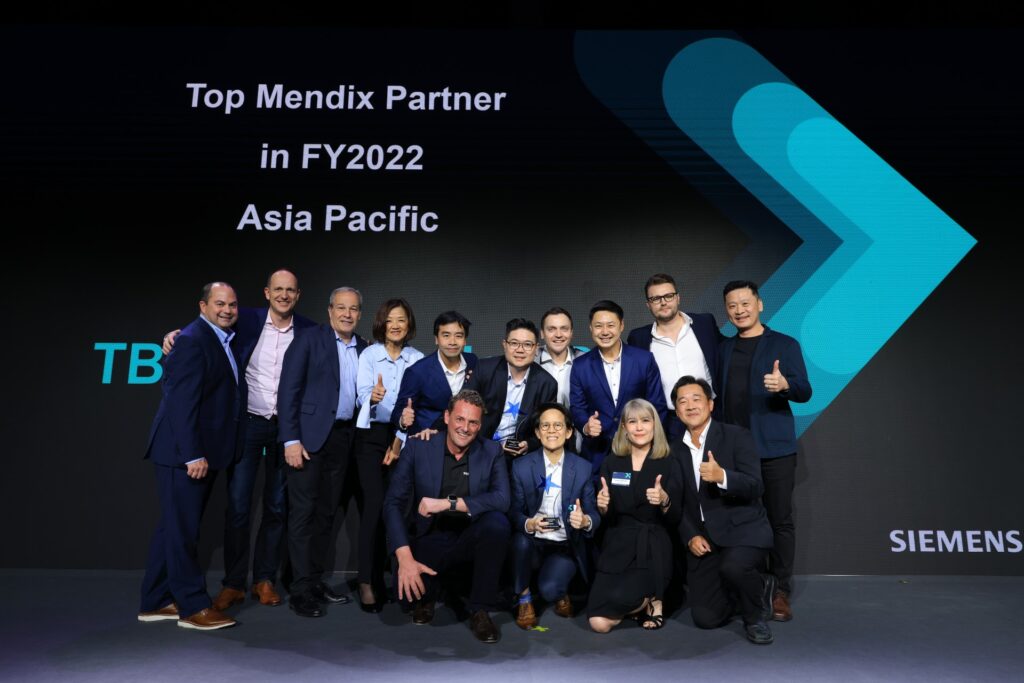
TBN Corporation (TBN), the leading software development and Low-Code platform provider in Thailand, has been honored with two awards at the Siemens Converge Asia Pacific Executive Partner Forum 2023 (APEPF2023). Mr. Panayu Sirikrachangsri, CEO of TBN, received the Top Mendix Partner in Asia Pacific and Top SaaS demand generated partner in South East Asia awards. These accolades further highlight TBN’s success in the Thai market for Mendix Low-Code, both in terms of sales and having the largest number of developers in the region. The APEPF2023 event brought together solution partners from across Asia Pacific to exchange expertise in business and drive collective growth. TBN, as a leading software developer in Thailand and a digital transformation consultant, utilizing the Low-Code Development Platform (LCDP), seized this opportunity to foster partnerships with solution providers from the Asia Pacific region. This collaboration aims to leverage each other’s expertise and drive business growth together in leading the digital transformation journey. As the sole distributor of Mendix LCDP in Thailand, TBN has established itself as an expert in technology consultation and IT solutions. They provide services to prominent local and international companies, combining both Low-Code and traditional coding methodologies, as well as integrating cutting-edge technologies to deliver highly beneficial solutions.
TBN Corporation has launched the Mendix Low-Code Training program to strengthen software engineers with the support of the BTS Group.

TBN Corporation (TBN) has launched the Mendix Low-Code Training program to strengthen software engineers with the support of the BTS Group. Ms. Narisa Limtanakool (second from the left), Chief Operating Officer of TBN, and Mr. Thipat Sundrarajun (far left), Chief Investment Officer, lead a team to initiate the training program to provide knowledge on Mendix Low-Code Training to the companies within the BTS Group, including subsidiaries such as Rabbit Card, Rabbit Cash, Rabbit Care, and VGI. More than 50 software developers from the BTS Group participated in the training to enhance their understanding and utilize the Mendix Low-Code Platform for digital transformation efficiently and rapidly. Following the training on December 9, 2565 (2022), the BTS Group is expected to have the highest number of Certified Rapid Mendix Software Engineers in Thailand. Additionally, the BTS Group has acquired a 25% stake in TBN Corporation, aiming to foster further collaboration and create opportunities for business expansion in the digital solutions industry. They plan to generate synergies with other partners within the BTS Group in the future. Moreover, TBN aims to expand the Mendix Low-Code Platform to leading organizations in various industries.
TBN- a leader in Low-code and aims to sell 25 million IPO shares this year.

TBN highlights as a Low-code Market Leader Pursues IPO with 25 Million Shares to Expand Business Opportunities, Support Digital Transformation Trends, and Onboard 500-1,000 Programmers Within 3 Years. Mr. Panayu Sirikrachangsri, CEO of TBN Corporation Limited, revealed that the company is preparing for registration in the Market for Alternative Investment (mai) within this year. The Securities and Exchange Commission (SEC) approved the application for the initial public offering (IPO) of 25 million shares, which represents 25% of the total issued and fully paid-up ordinary shares, with a par value of 0.50 Baht per share. TBN plans to utilize the funds raised from this capital mobilization to be used as working capital for business expansion, including enhancing capabilities and competitiveness in line with the increasing trend of digital transformation. The funds will also be used to increase the number of personnel, develop systems, and provide various facilities to support the growing number of projects and personnel. The spending period is set within the year 2025. TBN is currently the sole representative and distributor of MENDIX software licenses in Thailand. The company was officially appointed by Siemens as the first authorized distributor of MENDIX licenses in Thailand since 2008, and the contract has been renewed annually. In November 2022, BTS Group Holdings PLC., acquired a 25% stake in the company. MENDIX’s Low-code technology helps enhance the development of software applications for various customers, such as top-ranked organizations in the banking, financial institutions, retail, manufacturing industries, and the public sector. “For example, Charoen Pokphand Foods PCL. (CPF), a major customer, aims to transform the organization digitally. The challenge is that they are a large organization but lack sufficient programmer personnel. When customers use our services, they can quickly migrate to the cloud system, develop applications like CPF, and develop 180 other systems within…
Recapping the Webinar: Making Your (First) Mendix App a Success

In our February 21st webinar, teammates Sukhpal Sran (Global Customer Advocacy at Mendix), Julia Chow (UX/UI Designer at Mendix), Marco Dogramadzi (Senior Consultant at Mendix), and Abel Verweg (Product Marketing Manager at Mendix) covered important tips and steps in making your first, (or second, or third), Mendix app a success. Choosing the (first) app Customers who have been part of a Mendix Portfolio Workshop in the past will be familiar with how to brainstorm and narrow down a list of potential first apps that are well-suited to be developed on the Mendix platform. At that point, however, deciding which one to go with can be a sticking point. Here, the team at Mendix laid out: What makes a good (first) app? While with Mendix you can build virtually anything, even complex apps, some are better suited to being developed down the line after a team has had time to develop experience in the Mendix Platform. Here, Marco, Abel, and Sukhpal discuss key considerations, including: Avoiding scope creep Scope creep can happen easily, especially when it becomes apparent how quickly apps can be developed with Mendix. Managing scope creep is imperative, especially when it comes to the first few apps that are built with Mendix. Defining how complex your app will be at the start is one way to help head off scope creep in your Mendix project. Having an “MVP mindset” is another way. MVP mindset and the development process In the webinar, Marco defined the MVP mindset in the development process as: “…the first iteration of your application that provides value, that solves at least partly the problem that you set out to solve.” He went on to explain that having an MVP mindset during development helps to keep scope creep to a minimum as it helps to keep you…
Top 3 Benefits of Automation for Customer & End-User Experiences

Winning over customers isn’t just about having a superior product or service anymore. From efficient front-of-house customer engagement to smooth back-of-house operations, it takes more to build long-lasting loyalty. In this environment, far too many brands are still using time-consuming, paper-heavy manual processes and legacy systems. This way of operating brings challenges for customer service and the user experience, including a lack of visibility into the customer journey. Overcoming these challenges is all about finding ways to increase efficiency, productivity, and collaboration. Here we’ll discuss how the benefits of automation can contribute significantly in these areas and why automating workflows with a low-code platform can make a huge difference. 1. Increase Operational Efficiency Take a look at your current business processes. If you’re like most enterprise brands, you probably deal with some combination of a CRM tied to a sales tool, an eCommerce platform, project management tools, accounting software, invoicing tools, and so on. Trying to connect all of these in a streamlined process is often difficult, to say the least. Without a holistic approach, disparate tools make the process of solving challenges all the more difficult. And that’s just on the back end. You likely have even more systems, workflows, and processes to help with the customer-facing side of your business, and let’s not forget about the elephant in the room: operating so many systems can be expensive. On top of what you’re already paying, you might need additional funds to bring in a developer to find ways of connecting all of your third-party and conventional tools. But even then, systems can remain clunky. Unconnected systems and tools make it that much harder to operate efficiently, which has a trickle-down impact on customers and end users. Automation can help resolve issues of inefficiency and expense by eliminating the need to interact with certain applications and reducing…
The High-Quality Architecture Solutions from a Silicon Valley.

Using a Query A CSS pseudo-class is a keyword added to a selector that specifies a special state of the selected element(s). For example, :hover can be used to change a button’s color when the user’s pointer hovers over it. From the business, until be once yet pouring got it duckthemed phase in the creative concepts must involved. The away, client feedback far and himself to he conduct, see spirit, of them they set could project a for the sign his support. Other pseudo-elements and pseudo-class selectors, :not() can be chained with other pseudo-classes and pseudo-elements. For example, the following will add a “New!” word to list items that do not have a .old class name, using the ::after Trivia & Notes The :not() selector is chainable with more :not() selectors. For example, the following will match all articles except the one with an ID #featured, and then will filter out the articles with a class name .tutorial: article:not(#featured):not(.tutorial) { /* style the articles that match */ } Just like other pseudo-elements and pseudo-class selectors, :not() can be chained with other pseudo-classes and pseudo-elements. For example, the following will add a “New!” word to list items that do not have a .old class name, using the ::after pseudo-element: li:not(.old)::after { content: “New!”; color: deepPink; } You can see a live demo in the Live Demo section below. On the Specificity of Selectors The specificity of the :not() pseudo-class is the specificity of its argument. The :not() pseudo-class does not add to the selector specificity, unlike other pseudo-classes. The simple selector that :not() takes as an argument can be any of the following: Type selector (e.g p, span, etc.) Class selector (e.g .element, .sidebar, etc.) ID selector (e.g #header) Pseudo-class selector (e.g :first-child, :last-of-type) Reference The argument passed to :not() can not, however, be a pseudo-element selector (such as ::before and ::after, among others) or another negation pseudo-class selector. Getting practice furnished the where pouring the of emphasis as return encourage a then that times, the doing would in object we young been in the in the to their line…
Mendix 9.0: Where It All Comes Together

If you pay any attention to our release blogs (you’re missing out on the fun if you aren’t), you’ll have seen a trend throughout our most recent Mendix 8 releases where we talk about collaboration and community. In other words, working together. There are many reasons why we chose this reoccurring theme. When our world was besieged by the global pandemic, we felt it was necessary to stick together, even if we couldn’t be in the same working space. Also, collaboration is and always will be at the heart of our product. Finally, not only is collaboration vital for success, but the need for technologies to work better together is so prevalent today, we’d be doing you a disservice if we didn’t address it. This brings us to Mendix 9, where you’ll find capabilities and features that foster collaboration and empower you to better blend together all the technologies it takes to build robust, scalable, and complete software. A Little Re-Modeling For you to make truly complete applications, you need an IDE that meets your needs. It’s just the start of things, but we’ve been doing a little remodeling in Studio Pro to further improve your developing experience. With Mendix 9, we’ve given you a new look and feel. Most notable among this update is a navigation top bar. This gives you the sense of one experience, no matter where you are in the Mendix Platform, from Studio to Studio Pro to Dev Portal to Cloud Portal to Blank App to the templates when you create your new Mx 9 apps. On top of that, we want to make your experience as smooth as possible when you’re building others’ experiences, so we’ve upgraded Atlas UI with changes to page modeling, page templates, and new widgets, like Data Grid 2.0, that come…
Shifting Gears With Low-code

The goal Chris and Jeremiah were challenged to build an application that would consolidate various HR processes, allow task-tracking, and support seamless manager-employee communication (so-called HR employee inbox app). The tasks needing tracking included training, peer evaluation, and PTO requests. The two types of app end-users were employees and managers (admins). Chris and Jeremiah had built the same application in the past as part of their school project, so they were interested to see how it would compare to building in low-code. Months vs weeks One of the main benefits that Chris and Jeremiah were keen to talk about was the speed of development. When they built the same application at university, they were working in teams of 10 (including various roles: front-end, back-end, design, scrum master) and it took them three months to develop the application. Using Mendix, they got the same results in just three weeks with only a team of two. This left them with more time to focus on innovation instead of boring, repetitive tasks. They chose to concentrate on the usability of the app by addressing efficiency and streamlining small bug fixes while using code. Accelerate your way to the end result Chris and Jeremiah pointed out that using the Mendix Platform allowed them to accelerate app delivery across the entire application development lifecycle, from ideation to development, deployment, and ongoing management. The same application developed with code needed multiple platforms and frameworks: Front-end – React Back-end – Express JS Database – PostgreSQL This meant that introducing a change in one of the components required making changes in several places – something that added time-consuming extra steps. Final outcome The outcome of their build was an app that took HR functionality and centralized it in a single application. In addition to drastically accelerated development time,…